
Arizona’s Ismail Mahdi, Max Harris reportedly ruled ineligible by court
Following the court's decision, both Mahdi and Harris will not play during Arizona’s Big 12 home opener against Cincinnati on Saturday.

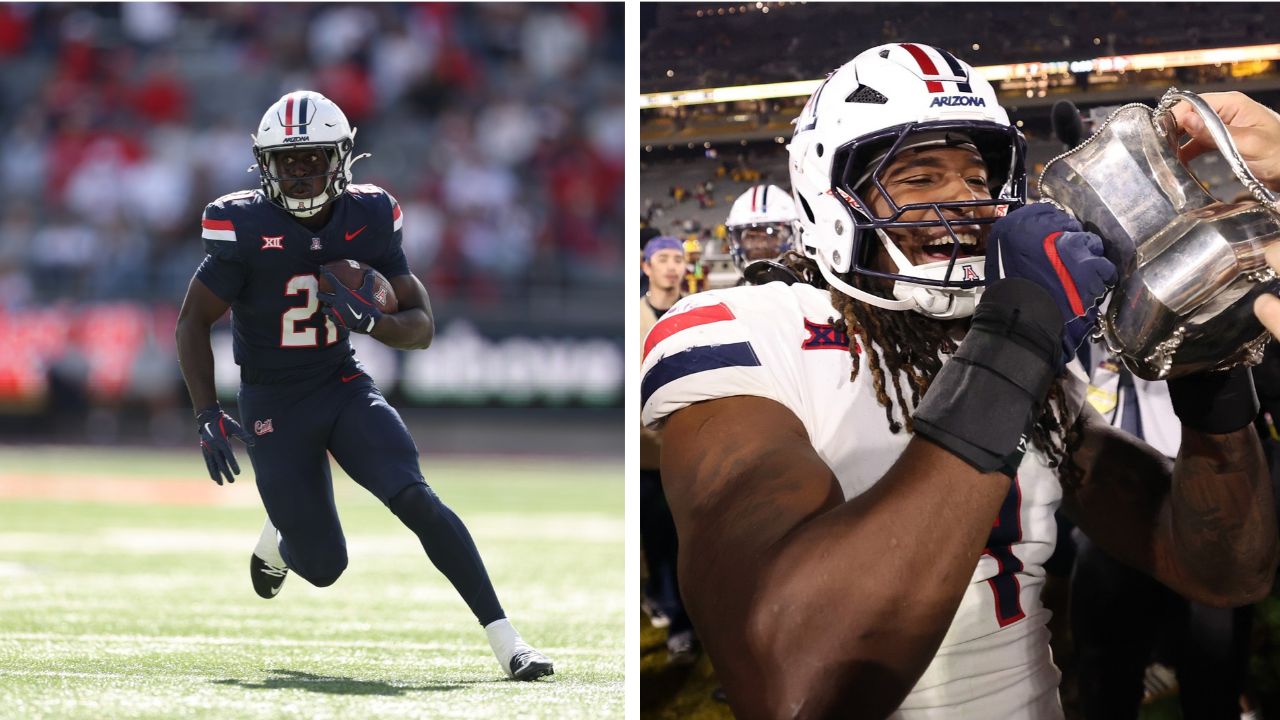
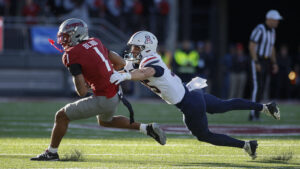
Arizona football's Ismail Mahdi (left) and Max Harris (right) have both been ruled ineligible. (Getty Images)
(Getty Images)
Arizona football running back Ismail Mahdi and linebacker Max Harris have both been ruled ineligible, effectively ending their eligibility as college athletes, according to the Arizona Daily Star’s Justin Spears.
Pima County Superior Court Judge Randi L. Burnett issued a ruling Friday evening denying a temporary restraining order aimed at blocking the NCAA from enforcing eligibility restrictions against the players this season, according to a report from the Arizona Daily Star.
Following the court’s decision, both Mahdi and Harris will not play during Arizona’s Big 12 home opener against Cincinnati on Saturday.
The legal standoff caps weeks of uncertainty for the Wildcats program regarding the pair’s eligibility. Mahdi, a standout running back who led Arizona in rushing yards last season, and Harris, an impactful linebacker, initially missed the team’s season opener against Northern Arizona.
However, after filing for a temporary restraining order in September, both returned to action starting in Week 2 against then-No. 15 BYU.
Before Friday’s ruling halted their participation, Harris tallied 10 tackles over three games, while Mahdi totaled 72 rushing yards on 12 carries, highlighted by a 63-yard performance against Washington State.
Represented by attorney Ryan Downton of Texas Trial Group alongside Tucson law firm Farhang and Medcoff, LLC, Mahdi and Harris anchored a broader coalition of collegiate athlete plaintiffs challenging NCAA eligibility limits.
The core of the legal dispute stems from the NCAA’s updated “five-for-five” eligibility framework, which mandates that an athlete’s five-year window begins upon initial college enrollment or after their 19th birthday.
While a federal preliminary injunction in Colorado (Wisne v. NCAA) initially granted members of the 2022 high school recruiting class an extra year, an August stay issued by the U.S. Court of Appeals for the Tenth Circuit froze that ruling. That decision left athletes like Mahdi and Harris, who played four consecutive seasons, without an additional year of competition.
Related
 Report: Arizona’s Tre Spivey expected to miss rest of the season with a broken foot
 Wildcats’ defense shines, as depleted Arizona blows out undefeated Cincinnati Bearcats
 University of Arizona requests to extend AD Desireé Reed-Francois
 Start times announced for Arizona State, Arizona’s Week 6 games
 Circus takeaway: Arizona alum Genesis Smith picks off Josh Allen on back-to-back passes
 Near flawless second half from Arizona defense helps Wildcats rally to beat Washington State

Comments
2 Comments
Please scroll down for the "expert" clarification of the train wreck that is the NCAA, and the current state of litigation on these matters. You'll also read how DC wants the Big XII to penalize U of A for "allowing" these two guys to play . . . That stems from DC's absolute HATE of the Cats, especially after his beloved Devils got the shower buddy prison treatment in Tempe last night. This entire situation for these guys and the NCAA/Court systems handling of it is lame/garbage. How about the basketball guys who were (literally) on an NBA roster, received paychecks, and then were let back on a college team?! Now THAT is some (bleeped)-up stuff, but DC's won't try to educate us on that, as it doesn't involve the Cats and/or Devils.
First off, I'm really happy with the Pima County Court's decision.
Too bad David Veenstra completely botched explaining the ruling, continuing a streak of botched explanations this Website and unfortunately a large number of similar sports Websites have provided while trying to explain legal matters that were obviously well above and beyond their paygrade. I'm assuming that his error was not intentional, but occurred because of a lack of legal education or experience. I can't say the same for a lot of other Websites.
What Veenstra should have said was that the concept of everyone getting 5 years of eligibility was not absolute. Instead eligibility was precluded for players who had declared for the 2026 NFL draft who didn't timely withdraw, as well as anyone who signed a contract to play professional football.
Arizona football running back Ismail Mahdi was declared ineligible because he declared for the NFL draft and did not timely withdraw. Linebacker Max Harris were ruled ineligible because he believed his college eligibility had expired after the 2025 season, so he participated in Arizona's Pro Day and went through rookie minicamp with the Denver Broncos over the offseason. The question remains if the Big 12 will punish Arizona for allowing ineligible players to play in games this year. By rule, the Big 12 does seem to have the authority.