
5 questions the Diamondbacks need to answer this offseason
The Diamondbacks have multiple big-picture questions to answer in an offseason after their third straight season barely missing the playoffs.

Watch: Why did the Arizona Diamondbacks miss the postseason, and what comes next? | 37 mins
The Arizona Diamondbacks answered their first significant offseason question by retaining manager Torey Lovullo for two more years.
Even before the end of the regular season, club leaders decided to offer Lovullo a multi-year contract, although he was not made aware until after the D-backs were eliminated from playoff contention.
The attention for Lovullo now turns to his coaching staff and whom he chooses to bring back, while evaluating the roster becomes the priority for the front office.
The Diamondbacks have put their fans through similar heartbreak for three straight seasons: averaging 85 wins with no postseason appearance and a final-weekend elimination.
ESPN’s David Schoenfield put it bluntly in a recent column that the D-backs “need to figure out how to build a 95-win team instead of an 85-win one.”
Arizona has a strong core with catcher Gabriel Moreno, shortstop Geraldo Perdomo, outfielder Corbin Carroll, starters Brandon Pfaadt and Ryne Nelson, along with relievers Justin Martinez, Juan Morillo and Brandyn Garcia, all in their 20s. Ketel Marte, Nolan Arenado, Corbin Burnes and Eduardo Rodriguez represent the veteran group.
Around them, the roster this past season and looking forward has flaws in need of attention.
Here are five questions to shape another critical offseason for an Arizona franchise stuck outside the postseason doors:
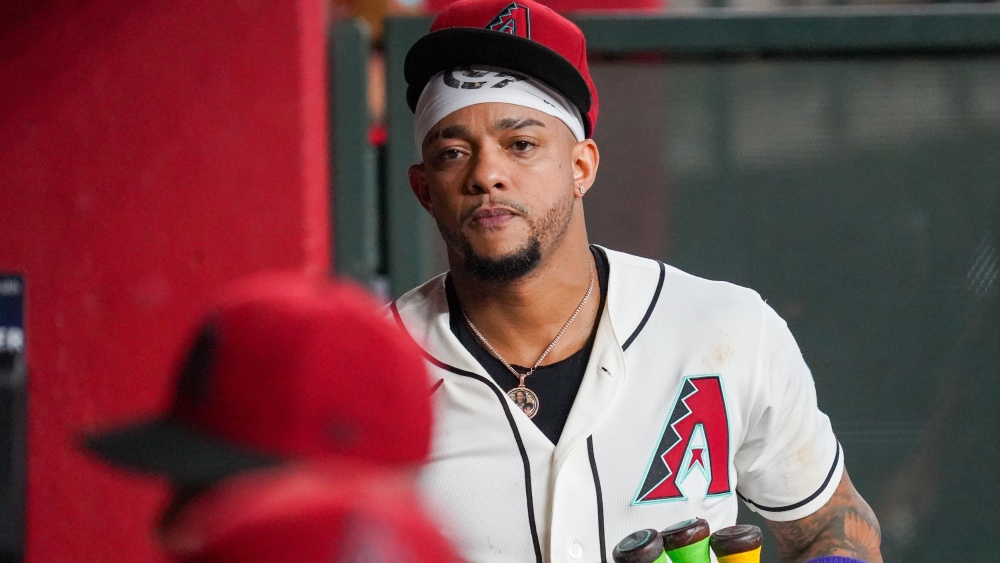
1. Will Ketel Marte return?
(Jeremy Schnell/Arizona Sports)
The Diamondbacks listened to offers for Marte last offseason and decided to hold on, deeming the potential return packages subpar for the immense value he has provided the lineup.
Marte secured his 10-and-5 rights (10 years in MLB, five on one team) in April, so he is operating with a no-trade clause moving forward.
Since then, Marte no-showed a game in Boston in mid-August as Arizona fought for playoff positioning and ended up going on the restricted list. He missed two weeks, apologized to his team and ultimately played well below his standard through the end of the season.
His batted ball data suggests his numbers (.748 OPS) should have been better, and he was coming off back-to-back All-Star campaigns, but another year of baggage plus a no-trade clause will make finding an appetizing deal difficult, if not impossible.
Lovullo told Arizona Sports’ Burns & Gambo on Thursday that he will not protect Marte publicly like he has over the years, signaling a change in attitude.
President and CEO Derrick Hall told Bickley & Marotta, “There’s a lot of noise around him. We understand why. He needs to understand it. He needs to understand why there’s a lot of noise around him. So I think there’s several changes and conversations with him that would have to be made.”
General manager Mike Hazen added to Wolf & Luke that he needs to evaluate whether his core of players has the right mix when asked about Marte, specifically. He previously mentioned, however, that there was no guarantee the D-backs win 86 games this season without Marte.
Marte will be 33 years old next season and is signed through 2031.
This is a complicated matter, and the question is whether the Boston incident was the final straw, shifting the tenor from listening to shopping. What is the value seen internally from turning the page on this partnership compared to the production he may provide going forward?
2. How can they hit right-handed pitching next year?
The Diamondbacks had extreme platoon splits, with an OPS against righties of .697 and against lefties of .782.
Naturally, they had the fourth-fewest plate appearances against lefties and the fifth-most chances against righties in MLB.
Hazen pointed to this as a substantial reason the D-backs missed the postseason.
One issue was that Carroll and Marte struggled to hit righties while doing the bulk of their damage against southpaws. Both had a wRC+ lower than 100 in the matchup, with 100 being league average.
Another was that Arizona’s rookies who came up and had chances to contribute were all right-handed, be it Ryan Waldschmidt, Tommy Troy or Jose Fernandez.
Ultimately, the roster did not lend itself to succeed in the matchup.
There was no Joc Pederson or Josh Naylor. Designated hitter was a revolving door, and the initial first base platoon of Carlos Santana and Pavin Smith accounted for -1.2 wins above replacement (Baseball Reference). Fliers on Max Kepler and Jesus Sanchez did not work, either.
Lars Nootbaar helped as a trade deadline addition, but the Diamondbacks cannot afford to go into next season with so little thump from the left side again. Internal growth will be needed, but there are some left-handed bats available in free agency: Pederson, Brandon Lowe, Luis Arraez, Jake Bauers, Nathanial Lowe and Jazz Chisholm Jr., to name a few.
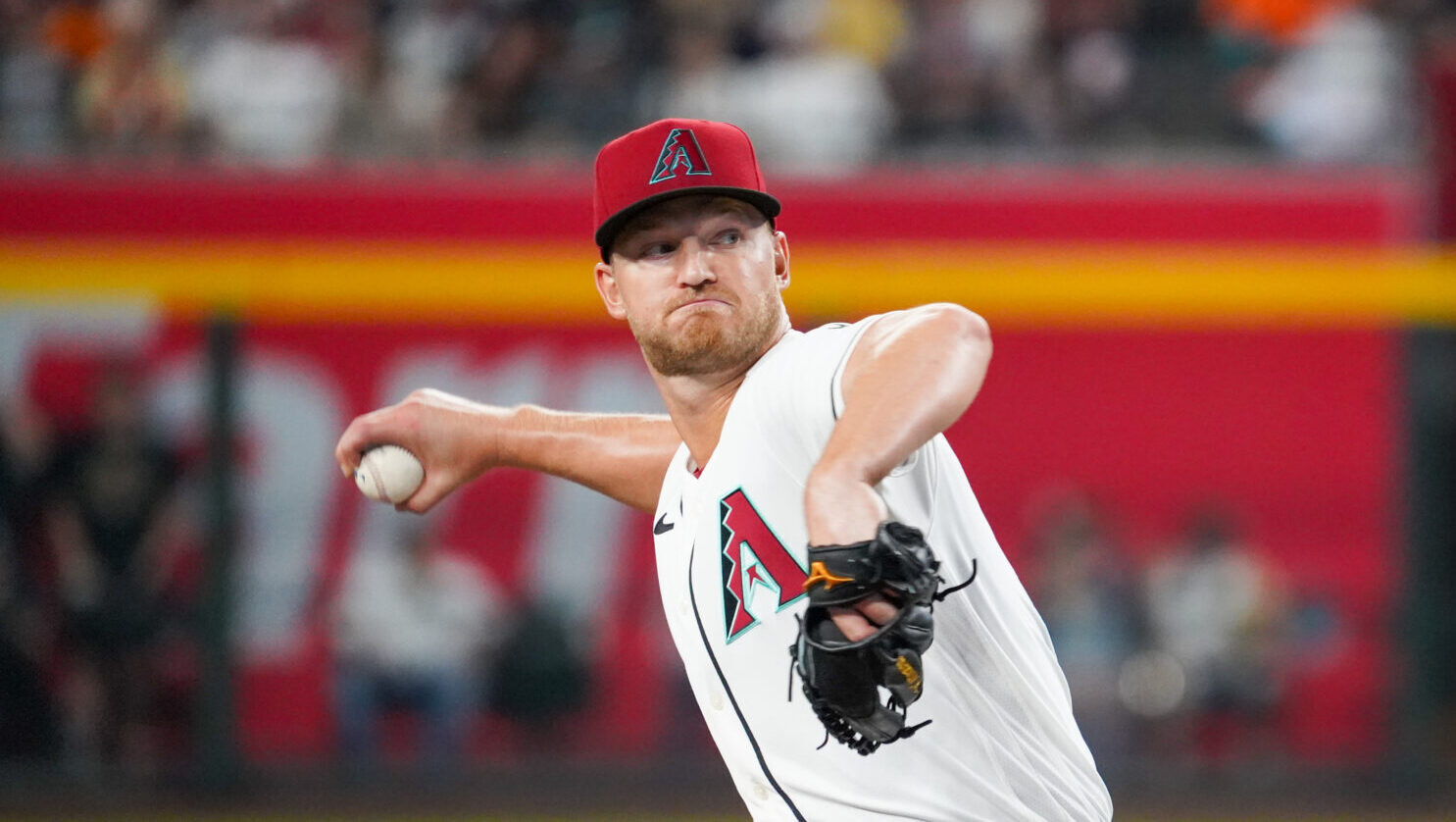
3. How will the Diamondbacks address pitching depth?
(Arizona Sports/Jeremy Schnell)
The Diamondbacks rostered so many starting pitchers early in 2026 that they had to bump Brandon Pfaadt to the bullpen, and that was long before Corbin Burnes was set to return by the All-Star break. By the end of the season, the Diamondbacks had tried to acquire starting pitching at the trade deadline and failed, Burnes made three starts and the team ran out a bullpen game when the season hung in the balance.
Burnes has an opt-out, as he has four more years left on a $210 million contract during which he has made 14 starts over two seasons.
If Burnes is back and healthy, then the Opening Day rotation projects as follows (age next season):
- Corbin Burnes (32)
- Eduardo Rodriguez (34)
- Brandon Pfaadt (28)
- Ryne Nelson (29)
- Merrill Kelly (38)
That may be a solid starting five so long as Burnes gets healthy and regains his top-end form after a normal offseason. But teams need more than five or six or seven starters to get by.
That is where Michael Soroka could come into play. After a strong first season in Arizona, the 29-year-old Soroka is set to hit free agency again. He said he would “absolutely love” to return, and Arizona Sports’ John Gambadoro reported the D-backs’ mutual interest.
This is his chance to land a multi-year deal, however, and the D-backs have significant money tied into its starting rotation already (a projected $89 million). If it is not Soroka, the D-backs may need to look elsewhere for at least long relief/swingman help to eat innings and compete with a list of young arms who dipped their toe in the majors this season: Mitch Bratt, Jose Cabrera and Kohl Drake.
The Diamondbacks did not sign a marquee closer free agent last year, opting to take short-term fliers on veterans to build around a unit expecting to get A.J. Puk and Martinez back from injury. Puk never returned, while Martinez was out until August.
Still, the bullpen finished fourth in win probability added (percentage change in chance to win) this past season and roster a dynamic trio of Garcia, Morillo and Martinez moving forward.
The bullpen is another area that needs to be built out around that young core this winter, as Kevin Ginkel, Jonathan Loaisiga and Taylor Clarke are among those hitting free agency.
Unity and flexibility described much of the attitude of the bullpen this season; multiple relievers have explained since the season ended. Are the Diamondbacks willing to bring the band back together after a success story, or will they try to get ahead for the new version?
4. Can the Diamondbacks extend Gabriel Moreno?
Moreno had a career season in 2026, winning the batting title with a .311 average while providing 16 home runs and stout defense.
The D-backs and Moreno had undergone extension talks in the past without coming to an agreement. Moreno has two years left under team control and earned quite a bit of leverage.
He is only 26 years old, and the Diamondbacks extended Carroll, Perdomo and Marte over the past four years.
What number will it take to get a deal done with the best catcher in baseball over the 2026 season?
5. How much lower will the payroll be?
The Diamondbacks’ projected payroll was not even $100 million in 2022. By 2026, it grew to $233.6 million, closer to the luxury tax than Arizona had ever been. The D-backs were 12th in MLB in payroll.
The Diamondbacks made it clear previously that they would not surpass the competitive balance tax threshold, which was $244 million this past season.
After a World Series run in 2023, the D-backs invested the money from postseason revenue to significantly increase the payroll. Even without making the playoffs in the two years that followed, Arizona continued to push.
Owner Ken Kendrick told Burns & Gambo that payroll will decrease this winter, but he did not specify to what degree.
“You don’t spend the money just to spend the money, you spend the money you think is appropriate to put a winning club on the field, and I think we can put a winning club on the field based on some of the high-dollar players going away,” Kendrick said.
The D-backs have money coming off the books (top five salaries):
- RHP Zac Gallen ($16.2 million)
- OF Lourdes Gurriel Jr. ($13 million, $5 million buyout)
- RHP Michael Soroka ($7.5 million, $10 million mutual option)
- RHP Ryan Thompson ($3.95 million)
- C James McCann ($3.25 million)
Some of the club’s big-money investments on free agents have backfired in recent offseasons, while modest deals for Arenado, Soroka and multiple relievers were the front office’s biggest wins last year.
Are the Diamondbacks going to continue pushing payrolls into the $200s million?
Payroll could also depend on the landscape of Major League Baseball after … gulp … a potentially lengthy lockout.
Bonus: When will the Diamondbacks play next?
The Diamondbacks are scheduled to play on Friday, Feb. 19, to open Cactus League play.
Arizona’s 2027 season will start in San Diego on Thursday, March 25.
The industry, however, is bracing for a lockout when the collective bargaining agreement expires in December, potentially one that threatens to cut into next season. The last lockout was in 2022, which pushed back spring training games to mid-March and Opening Day to April 7.
Hazen was clear that the potential lockout had nothing to do with the club’s decision to retain Lovullo and maintain continuity.
The owners want a salary cap; the players’ union will fight to prevent that from ever happening. That giant elephant in the room may change how teams operate early this offseason, with the future of competitive balance on the negotiating table.
Related
 Report: Diamondbacks picking Chris Garagiola as next TV play-by-play voice
 Which Diamondbacks are finalists for Gold Glove Awards?
 Grading Diamondbacks’ offseason trades, signings 1 season later
 Diamondbacks bringing back hitting coach Joe Mather
 Pat Murphy can save baseball and further cement himself as an Arizona legend
 Former Diamondbacks great Paul Goldschmidt wants to keep playing

Comments
12 Comments
Mike Hazen should be in jail for signing a washed-up Kelly for $40,000,000 for 2 years.
Jesus. H. Stop Dancing. Christ.
I’m pretty sure the MLBPA isn’t going to budge on having a cap unless it’s north of $300M-$350M with existing spenders grandfathered in (eg Dodgers). Otherwise I think it’s going to be prolonged stoppage.
Kendrick’s lower team salary comment is probably gearing towards a stoppage.
Regardless if the PV is $16.2M or $18.76M, why wasn't the $22.025M was disclosed in the article? Was it to protect Mike Hazen? Gallen made $22.025M for the 2026 season and E-Rod made $20M...who was the better pitcher? Kelly made $20M and he had a terrible season. It is my opinion that the Hazen wasted $62.025M of Kendrick's money on Gallen ($22.025M) and Kelly ($40M-2 yr)
Was the smaller PV (which means that the Dbacks used a higher loan interest rate than the IRA approved federal rate of 3.87%)? Was it to protect Hazen? Or the credit worthiness of the Dbacks require a higher interest rate? Or the Dbacks wanted to use a higher rate to bring down their payroll in attempt to avoid the luxury tax?