
Big 12 becomes latest conference to ban former NFL players while NFL reiterates its rules
The decision by the Big 12 came a day after rulings by the SEC and Big Ten.

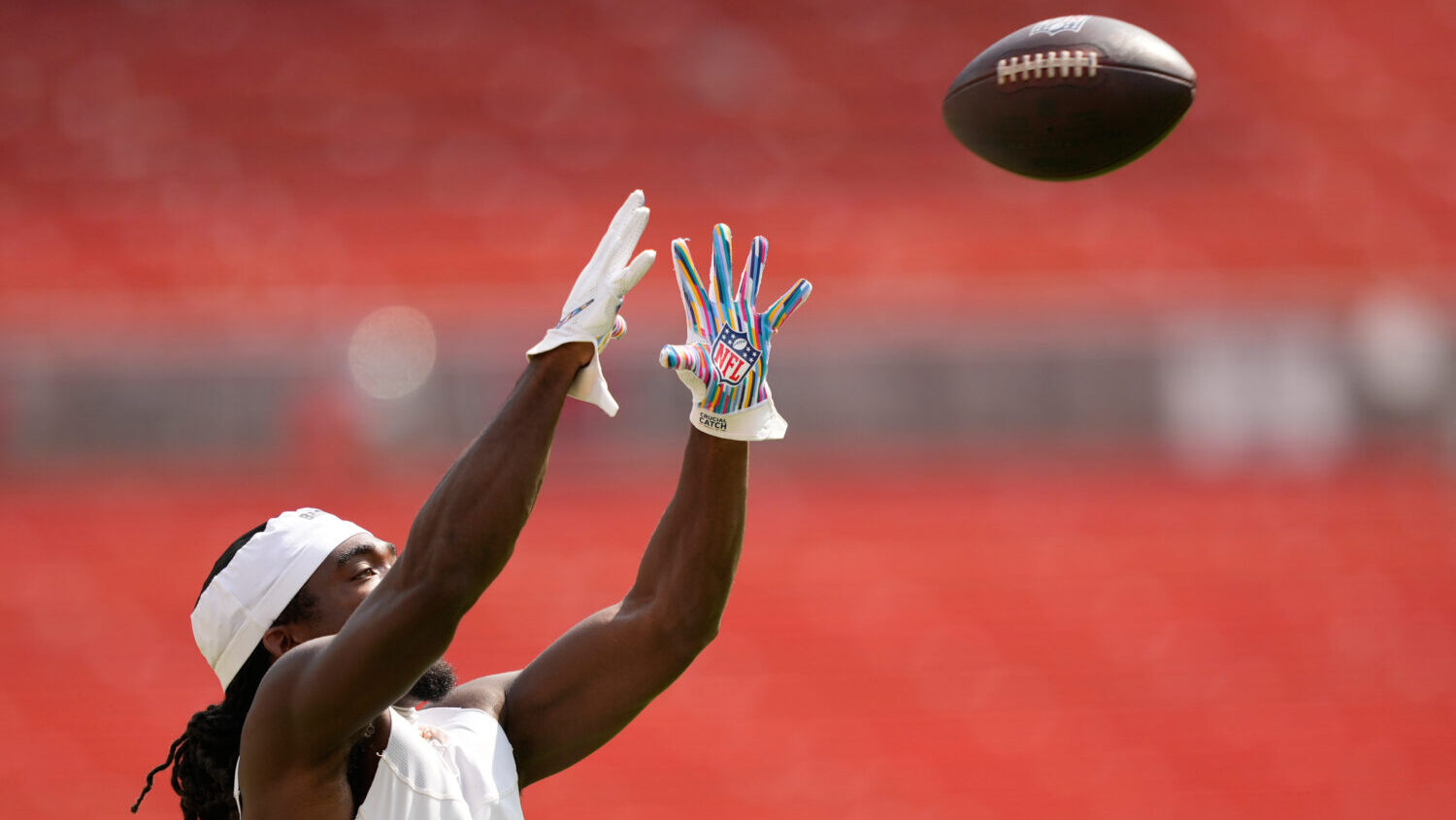
Cleveland Browns tight end Dae'Quan Wright warms up before a preseason NFL football game against the Buffalo Bills, Saturday, Aug. 22, 2026, in Cleveland. (AP Photo/Carolyn Kaster)
(AP Photo/Carolyn Kaster)
The Big 12 Conference on Wednesday followed the Southeastern and Big Ten conferences in banning players who were on NFL rosters from returning to college.
The decision by the Big 12 came a day after rulings by the SEC and Big Ten. Earlier Wednesday, the NFL made it clear that players who leave the NFL to return to college won’t be allowed to come back to the league this season.
NFL executive Troy Vincent reiterated the longstanding policy at the league’s meetings Wednesday, saying any player who returns to college would not be eligible to play in the NFL until 2027.
Atlantic Coast Conference leaders were also discussing the topic this week.
At least two players who signed with NFL teams as undrafted free agents this offseason were hoping to return to college and play at No. 11 LSU.
Tight end Dae’Quan Wright originally signed with Philadelphia as an undrafted free agent out of Mississippi following the draft. He was waived by the Eagles on Aug. 10 and claimed by Cleveland the following day. He spent about two weeks with the Browns without playing in an exhibition game before being waived on Monday. He cleared waivers Tuesday and now wants to go to LSU to play for his former Ole Miss coach, Lane Kiffin.
Defensive lineman Zxavian Harris signed with New Orleans in May as an undrafted free agent out of Ole Miss and participated in the offseason program. He was placed on the non-football injury list at the start of training camp in July and was waived Aug. 8. He wasn’t claimed by any team and also wants to go back to college to play for Kiffin.
Both players entered the NFL draft because they had used up their four years of eligibility. The NCAA announced a rule change in June allowing players who began college in 2023 or later to have five years to play five years of sports in college.
That rule didn’t apply to Wright and Harris, who entered college in 2022, but they are among the players who have sued the NCAA, arguing they’re being deprived of education and potential name, image and likeness benefits by being excluded from the rule.
Cal football general manager Ron Rivera said Wednesday he hopes the ACC joins the Big Ten and SEC in turning away former pros.
“I think when somebody makes a decision, goes in a certain direction, I think they’ve made their decision,” said Rivera, a former NFL player and coach. “I’m disappointed that people are looking for ways to cheat the system or beat the system.”
NCAA gets a win in Tennessee basketball eligibility case
Meanwhile, in Tennessee, the state’s Court of Appeals put on hold an order that would have given former Vanderbilt player Jalen Washington and 18 other basketball players a fifth year of eligibility.
The ruling gives the NCAA a win in ongoing litigation across the nation in federal and state courts involving college athletes who contend they should get a fifth year of competition under revised NCAA eligibility rules adopted in June.
Washington, who transferred to Tennessee, and the other plaintiffs are now ineligible, pending resolution of the NCAA’s appeal of the lower court’s ruling.
Washington was the lead plaintiff in a complaint filed July 6 by the Texas Trial Group seeking the injunction. Others included Chendall Weaver, last at Texas; A.J. Storr of Mississippi; Jason Edwards of Providence; and Daniel Egbuniwe of St. Bonaventure.
The NCAA also has won stays of injunctions in Ohio and New Jersey state courts and in a federal court in Colorado.
Castellanos commits to Texas Tech after Dolphins tryout
The Big 12 decision Wednesday came shortly after quarterback Tommy Castellanos said he has committed to Texas Tech for this season. The 12th-ranked Red Raiders are the defending Big 12 champions and among the favorites again this season.
Castellanos, who played last season at Florida State, last Friday was among 10 athletes granted a temporary restraining order by a Kentucky judge to get a fifth season of college football.
Castellanos, a freshman at UCF in 2022, went undrafted by the NFL four months ago before a tryout as a receiver with the Miami Dolphins during their rookie minicamp. But he never made an NFL roster.
Related
 Graham Rossini talks decision to hire Dave Haxtel as new hockey coach, ASU athletics
 Arizona basketball picked to win Big 12 in coaches poll, Motiejus Krivas is Preseason Player of the Year
 ASU officially names NHL coach Dave Hakstol new hockey coach on 5-year deal
 ASU brought way more energy to practice. Can it translate to Texas Tech matchup?
 Brent Brennan donates 1,000 tickets to Arizona’s homecoming game
 Sam Vecenie’s first 2027 NBA mock draft sees 3 Wildcats selected in the top 10

Comments
3 Comments
Rowser has a jersey on today, but they've already said he won't play. Fact is every Conference has adopted rules similar to what the Big 12 has, precluding professional athletes from going back to school. Collectively, conferences have drawn their own proverbial red line in the sand, and they're willing to die on that hill. Rowser definitely is going to be considered a pro because he declared for the NFL Draft and then never officially withdrew.
In the last 48 hours, the SEC threatened LSU with the loss of half their budget over possibly a number of years, and said that Lane Kiffin could face a half-year suspension for not complying with the new Big 12 rules, i.e. having "professionals" on their roster, or even having them dress. The Big 12 is likely to follow suit. There is talk that the Big 12 will vote early on how to punish Houston.
The Controlling Opinion is from the U.S. 10th Circuit Court of Appeals in Denver, a Superior Court who essentially quashed all the previous Inferior Court rulings. The Quashing will absolutely includes the ruling Wednesday by an Inferior Court in Kentucky Judge's ruling. Tommy Castellanos isn't going to be able to play at Texas Tech, who will still be stuck with Will Hammond as their QB1.
Additionally, in the last 72 hours ALL the Major Conferences have seemingly aligned themselves by passing nearly identical rules precluding any former college athlete who either (1) Declared for the draft, but didn't timely withdraw (Rowser's fatal flaw); (2) signed a professional contract.
At the end of the day, it is my legal opinion that these legal matters will fallout like this: If a player left HS in 2022 they're automatically eligible for a 5th year, but they can't transfer unless they were already in the portal. Rowser won't be going to Houston since he was precluded from that option by both the new Big 12 rules and Superior Court ruling. Rowser and Kongaika's only option is to return to ASU, if Dilly will have him. Moe Odum can also return to ASU if Randy Bennett agrees (and it sounds like they're on the same page). I wonder if Dilly would consider allowing them to still join ASU?
Anybody with an IQ higher than a celery stick knows that the NCAA is the "minor leagues" for the NFL. With college players being paid, on average, $30+ million per Div I team, the NCAA is anything "amateur". This masquerade is a joke. If a player fails to measure up in the NFL, why should he be prohibited from earning a living by going back to college?